Hey there everyone! Hope all of you are doing well in these weird times of covid-19 quarantine. With more time on most peoples hands due to social distancing take the oppurtuinity to read my blog on the course “The ROI of social media marketing” taught by Carlos Gill. Within my blog you will find all of the main points that I found worth sharing from Gills course.
Social Media KPIs and Tools for measurement
Aligning social media and business strategies:
- Where are your customers? Facebook, Instagram, or other platforms
- What are your competitors doing or not doing?
- what is your purpose for being on social media? Is it to drive customer acquisition, leads, brand awareness, customer service, or talent acquisition?
Using social media for business is not limited to just positing once a day and checking back in regularly. No. It requires a full business strategy centered on content, community, consistency, and conversion which I refer to as the four pillars of a social media strategy.
Metrics you should measure, otherwise referred to KPIs or Key Performance Indicators, will vary based on the type of content that you post as well as your objective for posting.
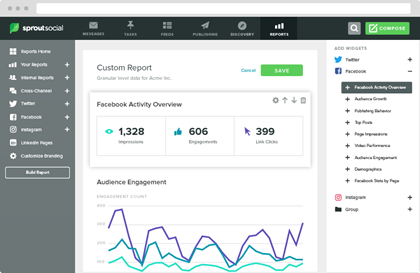
Some of the major metrics that should be measured are:
- Impressions
- Engagements
- Views
- Clicks
All metrics matter as they are an indication as to whether or not your content is performing favorably amongst your audience of followers.
There are tools that can be used to help you measure. The tools that you use will vary based on your needs and also the size of your business as most tools charge a premium or monthly fee to unlock the most critical features outside of basic posting. Do take into consideration that some platforms have built- in tools already.
Decoding Social Media Analytics: What Does it Mean?
Facebook is a great platform to place your content in front of a targeted group of its users based on demographic and interest-based data. Facebook is a digital advertising platform and operates similar to a casino, whereby the more money that you spend, the higher likelihood you have of winning the game in the form of customer acquisition (Gil, 2019). The lifeline of a Facebook post is not very long and will only be relevant for less than 24 hours, unless it gains significant traction within the Facebook algorithm, which serves up content to its users based on the actual user engagement, which is why monitoring your post performance and repurposing old content is critical to boosting organic reach. Facebook also offers the integration of Shopify which allows your Facebook page to be leveraged as a shoppable online storefront where you can list products for sale, and Facebook users can buy from you without ever having to leave the site.
Driving a Measurable ROI on Each Channel
LinkedIn is the go-to social network for business professionals around the world. Having a defined presence on LinkedIn can be a tremendous asset for any business owner, executive, or professional by way of new contacts, lead sources, and clients. Due to the rise of internet fame and business thought leadership your personal brand is also your resume and business card. With LinkedIn, you can see who’s viewing your profile and it’s easy to do.

Another platform you can use that has potential to earn you revenue is YouTube. The more content that you create and the more views that you receive the more money that you will make by running ads on your videos. Before you get to excited about revenue from videos do take a few things into account:
- YouTube requires 1000+ subscribers to monetize
- create a list of 12 to 15 tutorial or how-to videos to act as anchor videos.
- Title your new videos with key words, such as tips, how to, and the best.
- Retitle existing videos for improved search optimization.
The science behind YouTube is less about posting quality content and more about having the right mix of searchable titles, keywords in your video description, and tags in your videos, otherwise known as YouTube SEO (Gil, 2019).

Here are some tips on how to use video content on social media:
- Have a purpose: entertain or educate
- Optimize titles and descriptions
- Teach with how-to videos
- Outsource production resources
Bonus Strategies for Maximizing ROI
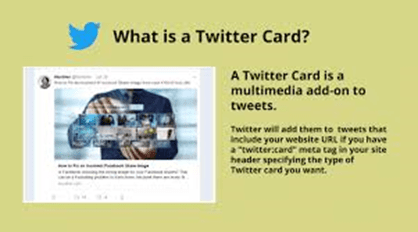
Twitter Cards offer a way to make your content stand out and drive website link clicks without putting the link in the body of the tweet, thus offering more characters to work within Twitter’s 280-character count limit. Twitter Cards are also an easy growth hack to improve your click-through conversions for free. Twitter cards require creativity and strategy in the form of an eye-catching visual.
Social media storytelling is a newer form of content marketing made popular by Snapchat and Instagram, as well as YouTube personalities. With stories, think of yourself as the star of your own reality series. The key to telling good stories in social media is less about the platform and more about the story that you’re trying to convey. Because stories expire within 24 hours of being posted, your stories should be short, attention-grabbing, and drive users to take a specific call to action.
Today’s average social media user sees your content on a mobile device, or while quickly scrolling through their newsfeed. Therefor your content captions should aim to be short, direct and to the point.
To make an effective post, keep these guidelines in mind:
- Make sure that your posts are one to two sentences in length
- Lead in with an open-ended question whenever possible
- Refrain from using call to action, such as comment below, like this post
- Do not post a link in the caption.
Conclusion
In my opinion the most important piece of information I took away from this course was the four pillars your social media strategy should be built around. Content, community, consistency and conversion. No matter the platform being used, these four pillars need to be applied. I personally don’t have a business social media account at his time, but in the meantime I will start by applying these to my personal account. I do post pretty interesting content in my opinion, but definitely need to work on consistency. Going forward ill be referring to these pillars while using social media and posting. Ill gather information about my posts and their metrics and use what I learn through my personal accounts and apply it on a business page in the future.
References
Gil, C. (October 9, 2019). Social Media Marketing: ROI. Retrieved from https://www.linkedin.com/learning/social-media-marketing-roi-2/the-roi-of-social-media-marketing?u=2109516
 Rory Frost